
Journals
-

Journal of Communication and Education Studies
Journal of Communication and Education Studies (JCES) is an international peer-reviewed journal dedicated to advancing interdisciplinary scholarship at the intersection of communication and education. JCES conceptualises Communication and Education Studies as a field of inquiry that examines how communication shapes learning processes, knowledge construction, literacy development, and educational transformation across diverse educational contexts.
JCES particularly encourages research that investigates how communication practices, media, digital technologies, and evolving communication environments influence learning experiences in formal, non-formal, informal, and lifelong learning settings. The journal is especially interested in studies addressing contemporary educational challenges arising from digital transformation, artificial intelligence, media convergence, changing communication practices, and the evolving relationship between technology, knowledge, and society.
JCES prioritises theoretically informed and empirically grounded research that advances the understanding of communication as a social, cultural, technological, and pedagogical process. Education is not regarded merely as the context of research, nor is communication treated simply as an auxiliary variable. Rather, every article is expected to make a substantive scholarly contribution to understanding how communication shapes educational processes, experiences, and outcomes.
-

Laa Maghrib: Journal of Development in Islamic Economics and Business
Laa Maghrib: Journal of Development in Islamic Economics and Business is an open access, peer-reviewed scholarly journal that applies a rigorous double-blind peer review mechanism to ensure the quality, originality, academic integrity, and scholarly contribution of every published manuscript. The journal provides a platform for academics, researchers, and practitioners to publish original research articles, theoretical discussions, and critical studies related to the development of Islamic economics and business. Through its open access policy, Laa Maghrib ensures that published works are freely accessible to scholars, practitioners, policymakers, and the wider community to encourage knowledge dissemination and the advancement of Islamic economic and business practices.
The journal is committed to supporting the development of knowledge, innovation, and practices based on Islamic values in responding to contemporary economic and business challenges. Through a transparent and rigorous editorial process, Laa Maghrib promotes high-quality scholarly communication by encouraging interdisciplinary perspectives and evidence-based studies in Islamic economics and business.
In the field of Islamic economics, Laa Maghrib examines various issues such as economic development based on maqashid sharia, Islamic economic systems, fiscal policy and Islamic public finance, and the role of zakat, infak, sedekah, and waqf (ZISWAF) in promoting social justice, economic empowerment, and sustainable development. The journal also covers studies on Islamic macroeconomics, the integration of Islamic values into economic policies, and the contribution of Islamic economics in addressing global challenges, including poverty, inequality, financial inclusion, and environmental sustainability.
In the domain of Islamic business, the journal focuses on contemporary practices and innovations in shariah-based business development, including shariah-compliant management, value-based entrepreneurship, halal marketing, and digital transformation in Islamic business ecosystems. Topics such as innovation in shariah business models, Islamic business ethics, Islamic entrepreneurship, fintech development, digital Islamic finance, and the transformation of halal industries are key areas of interest in responding to the evolving needs of the global halal economy and the broader shariah-based economic sector.
-
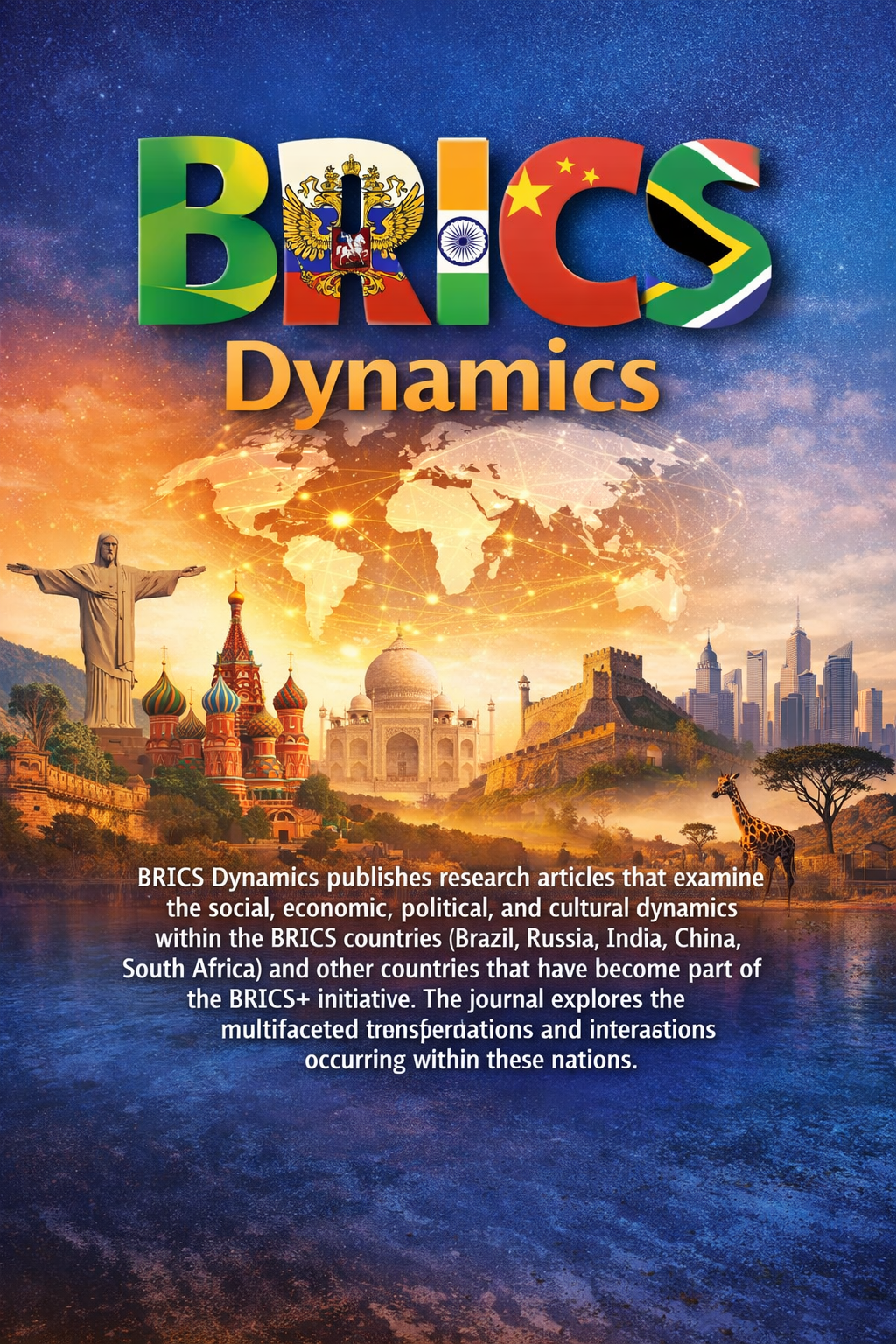
BRICS Dynamics
BRICS Dynamics is an academic journal that focuses on the social, economic, political, and cultural transformations occurring within the BRICS countries—Brazil, Russia, India, China, South Africa—and the broader BRICS+ initiative. The journal publishes research on key issues such as social inequalities, migration, and community networks, alongside studies on the impact of globalization and cultural heritage in shaping identity and social cohesion. It also explores the economic shifts resulting from market integration, trade agreements, and policy reforms, and the political changes regarding governance, democratization, and civil society. Additionally, the journal highlights inter-regional relationships, examining the diplomatic, trade, and cultural exchanges among BRICS+ nations and their growing influence in global governance. With comparative studies that explore both the similarities and differences across these countries, BRICS Dynamics aims to contribute to a deeper understanding of how these emerging global powers are shaping the future of international relations and global systems.
-
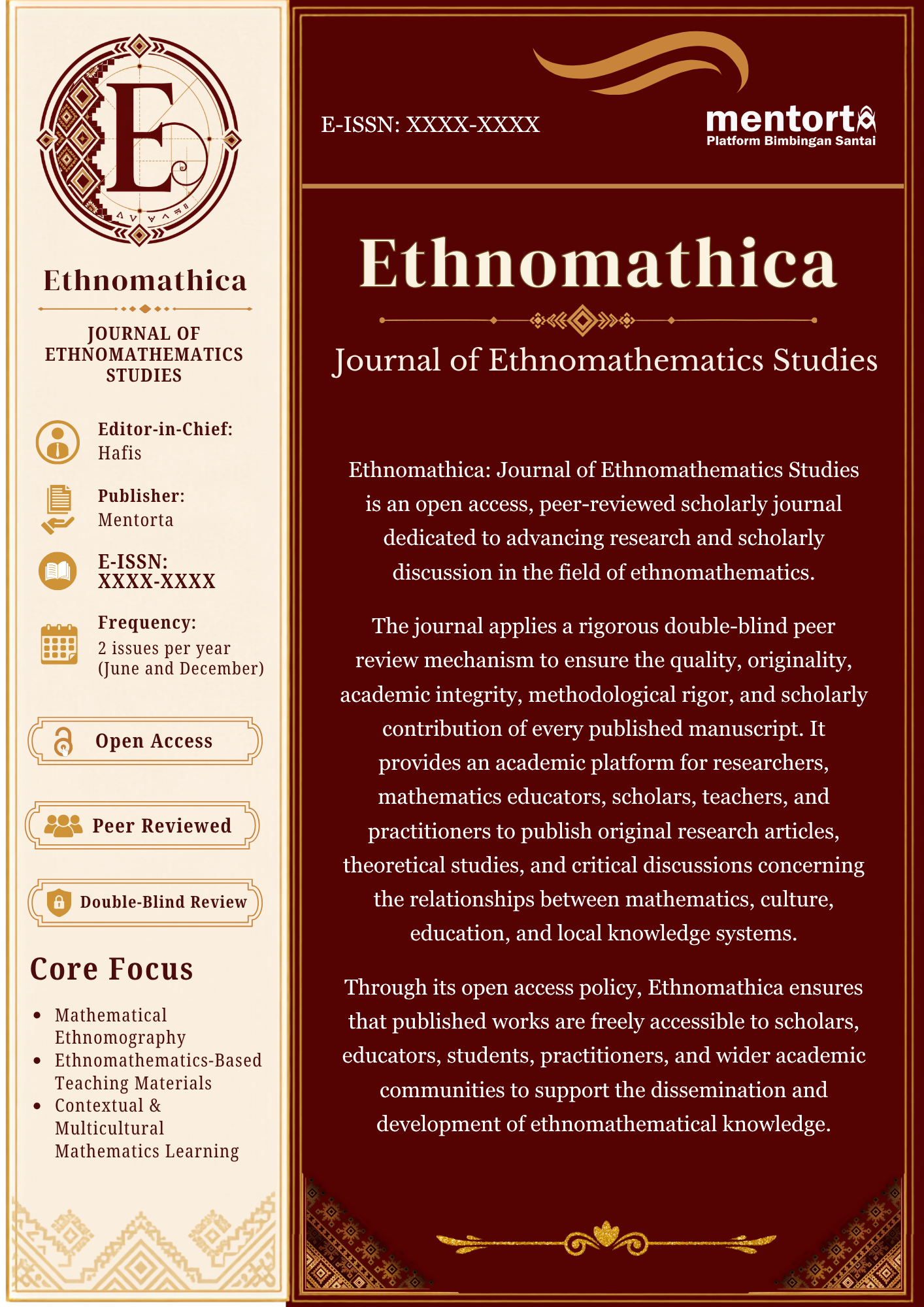
Ethnomathica: Journal of Ethnomathematics Studies
Ethnomathica: Journal of Ethnomathematics Studies is an open access, peer-reviewed scholarly journal dedicated to advancing research and scholarly discussion in the field of ethnomathematics. The journal applies a rigorous double-blind peer review mechanism to ensure the quality, originality, academic integrity, methodological rigor, and scholarly contribution of every published manuscript. It provides an academic platform for researchers, mathematics educators, scholars, teachers, and practitioners to publish original research articles, theoretical studies, and critical discussions concerning the relationships between mathematics, culture, education, and local knowledge systems. Through its open access policy, Ethnomathica ensures that published works are freely accessible to scholars, educators, students, practitioners, and wider academic communities to support the dissemination and development of ethnomathematical knowledge.
The journal is committed to strengthening ethnomathematics as an interdisciplinary field that recognizes mathematical knowledge as closely connected to cultural practices, traditions, values, ways of thinking, and everyday activities within diverse communities. Ethnomathica encourages scholarly works that explore how mathematical concepts are constructed, represented, practiced, transmitted, and interpreted within particular cultural contexts. Through a transparent and rigorous editorial process, the journal promotes high-quality academic communication and encourages theoretically grounded, methodologically sound, culturally sensitive, and evidence-based studies that contribute to the advancement of ethnomathematics and mathematics education.
In the area of exploring local cultural studies and mathematical ethnography, Ethnomathica publishes studies that identify, document, interpret, and analyze mathematical ideas and practices embedded in local cultures and community traditions. This includes ethnomathematical investigations of traditional architecture, crafts, weaving, ornaments, traditional games, agricultural activities, trading systems, measurement practices, counting systems, indigenous technologies, rituals, calendars, and other cultural practices. The journal particularly welcomes studies that reveal mathematical concepts, reasoning, patterns, representations, and problem-solving strategies that emerge from culturally situated knowledge and everyday community practices.
In the field of developing ethnomathematics-based teaching materials, the journal focuses on research concerning the design, development, implementation, validation, and evaluation of educational resources that integrate ethnomathematical knowledge into mathematics teaching and learning. This includes textbooks, modules, student worksheets, digital learning resources, interactive media, assessment instruments, instructional models, and other educational materials inspired by local cultural contexts. The journal encourages studies that demonstrate how ethnomathematics-based teaching materials can strengthen students' mathematical understanding, conceptual connections, problem-solving abilities, mathematical literacy, cultural awareness, and meaningful engagement with mathematics.
In the area of contextual mathematics learning and multicultural pedagogy, Ethnomathica promotes research examining the integration of ethnomathematics into culturally relevant and contextual mathematics education. The journal welcomes studies on contextual mathematics learning, culturally responsive mathematics education, multicultural pedagogy, culturally sustaining teaching practices, and the integration of local knowledge into mathematics classrooms. Particular attention is given to research that investigates how cultural contexts can support meaningful mathematics learning, enhance student participation, strengthen mathematical reasoning, promote cultural identity and appreciation, and create more inclusive, equitable, and culturally responsive learning environments.
Through these areas of focus, Ethnomathica: Journal of Ethnomathematics Studies seeks to become a scholarly forum for advancing ethnomathematics research across diverse cultural and educational contexts. The journal welcomes contributions from researchers and scholars worldwide and encourages comparative, interdisciplinary, and cross-cultural perspectives that expand understanding of the dynamic relationships between mathematics, culture, and education. By promoting rigorous research and meaningful academic dialogue, Ethnomathica aims to contribute to the continued development of ethnomathematics as a distinctive and internationally relevant field of scholarship.
-
MAQASID: Journal of Islamic Law and Society
MAQASID: Journal of Islamic Law and Society is a peer-reviewed academic journal that publishes original research on Islamic law, including its interpretation, application, and development within contemporary society. The journal examines how Islamic law interacts with evolving social, economic, political, and cultural realities, both in Muslim-majority and Muslim-minority contexts.
MAQASID welcomes theoretical, empirical, and comparative studies that critically engage with classical and contemporary Islamic legal scholarship, as well as interdisciplinary approaches drawing on sociology, anthropology, political science, and economics. The journal aims to serve as a scholarly forum connecting Islamic legal theory with the social realities it addresses, while fostering dialogue between traditional fiqh and contemporary legal, ethical, and social challenges.
