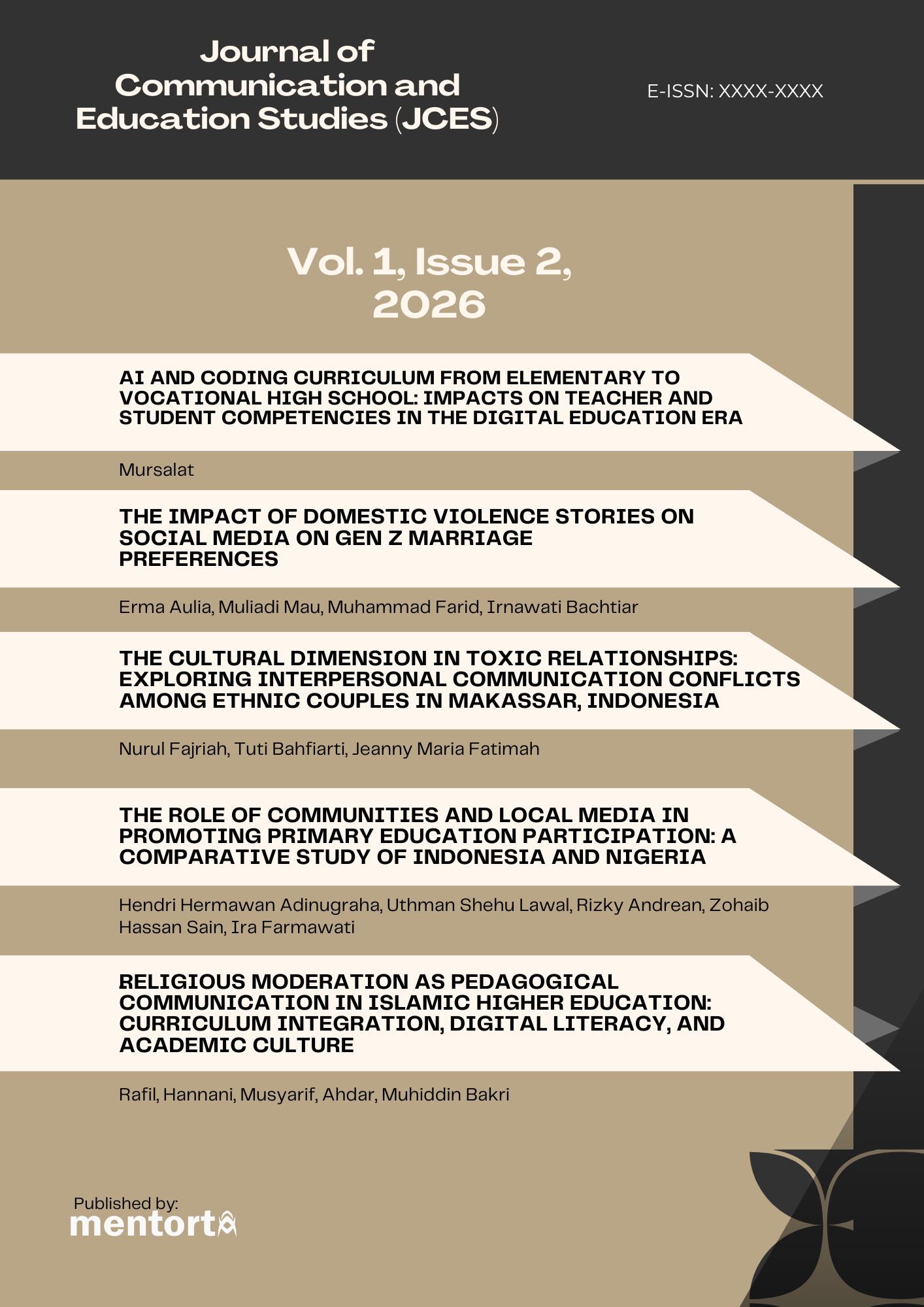
AI and Coding Curriculum from Elementary to Vocational High School: Impacts on Teacher and Student Competencies in the Digital Education Era
Kata Kunci:
Artificial Intelligence, Coding, Digital Curriculum, Teacher Competence, Student CompetenceAbstrak
This study explores the integration of Artificial Intelligence (AI) and coding into the educational curriculum from elementary to vocational high school levels in Indonesia, examining its impact on teacher and student competencies in the digital era. The research employs a descriptive qualitative approach, utilizing library research to analyze challenges in AI curriculum implementation. The study identifies key issues such as teacher preparedness, technological infrastructure, the need for standardized learning modules, and students' cognitive readiness. It emphasizes the importance of aligning AI and coding education with 21st-century skills, such as critical thinking, creativity, and problem-solving, while addressing the cultural and structural challenges within the Indonesian education system. Despite challenges in infrastructure and teacher competence, AI integration is seen as essential for preparing students for a technology-driven future. The study also proposes the development of adaptive curriculum models and teacher training strategies, advocating for an inclusive, context-sensitive approach to digital literacy. The findings offer insights for policymakers and educators to enhance the quality of AI and coding education, ensuring that Indonesia’s future workforce is equipped with necessary digital competencies to compete in the global economy.
Unduhan
Unduhan
Diterbitkan
Terbitan
Bagian
Lisensi
Hak Cipta (c) 2026 Mursalat (Author)

Artikel ini berlisensiCreative Commons Attribution-ShareAlike 4.0 International License.